
University of Georgia Athletics
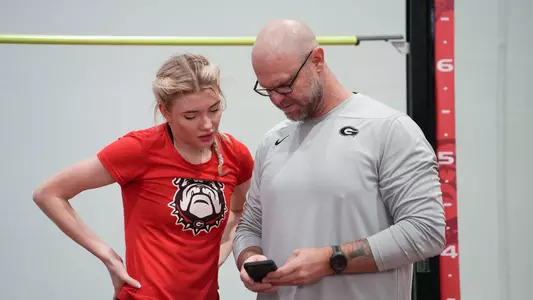
Getting To Know Track & Field’s Ryan Baily
February 22, 2024 | Track & Field
By Will Bennett
Here is a look at who Ryan Baily is . . .
Q: How has your experience working for multiple schools helped you reach the level you are now?
A: In coaching, we talk about being part of the process, but it's also experiences in life that help us in the future. Any challenges that coaches face help them get to future positions and shape them for it. Every job that I have had has shaped me one way or another in order to get to where I am today. Being able to come into this job and already have that prior experience elsewhere is super important. The longer that you do anything, the more experience that you get.
Q: What has the change been like going from the different levels of collegiate sports?
A: I would say that I was very fortunate to go from the different levels like NAIA, to (Division II), to D1. Starting at the NAIA level, you are helping athletes who normally don't quite have the talent to go D1. The stuff you work on is the same, but at that level the goal is to mainly to begin to develop those athletes. Coaching at different levels helps you appreciate the athletes that you do have. In the other divisions as a coach, you run into issues with money and funding with things like getting athletes shoes etc. It's hard to be a coach and to have to find funding in order to help your athletes while being creative and staying within the guidelines of finding funding. I think having those troubles at that level helps you become better as a coach.
Q: Did winning USTFCCCA Coach of the Year honors multiple times help you get to higher levels in collegiate sports?
A: I don't think it was ever a goal to win those awards, it was just me being the best of myself. Also trying to be the best for my athletes and my team. I think many coaches get lost in the ego driven world that we are in, I see it happen a lot. I think if a coach truly wants to help his student-athletes, then he has to be there for them and they should be the primary reason that we do what we do. As a coach, the focus should mainly be on them. I think being Coach of the Year wasn't the goal but seeing my student-athletes succeed was. Also helping them achieve monumental things in their event. That is why I am at where I am. At the end of the day, my main goal was to be there for the athletes and never make it about me.
Q: What did switching from a coach to a police officer help you with when you returned to coaching?
A: Trying something new outside of coaching was awesome. Stepping away from coaching at 40 years old and having that opportunity was probably one of the best things that I did in my life. It gave me a whole new perspective on that part of the world and athletes. A lot of time we lose our patience as coaches and as a cop, you need to have a lot of patience. You also get to learn that your athletes are much better people to deal with than those you normally have to deal with as a cop. As a cop, you are around the worst of the worst sometimes, not the best of the best all the time. I was able to work with some great cops, but you are still around the worst of worst out on the job. The experiences you have and the people that you are around change your perspective on life for sure. I think that was a huge lesson of learning that my job as a coach is something I want to be doing and not something I have to be doing. Coaching is something that I get to do and something I want to be doing. I'm very thankful. Coming back to coaching was great although being a cop wasn't bad at all. Being a cop takes a special person for sure.
Q: How has Athens been so far? How has the little time to switch before the season started been?
A: I have had a little bit of a challenge getting used to the city, finding my way around the facilities and implementing my coaching style here. It hasn't been too difficult at all and Athens has been a great place so far with very welcoming people. I have been able to get help in any area very easily.
Q: With this being an Olympic year, how has training been? Also how has the prep been different?
A: An Olympic year is always super exciting for a sport that revolves around the Games being a huge goal. It is the most attention our sport gets every four years. That's when most people pay attention. It makes it exciting but adds extra work. The competition is harder, and the stakes are higher. It's like another avenue for the athletes to get excited for outside of NCAAs. Now they can get excited for competing for their country, whether that is the U.S. or somewhere else. They all get excited, but they still need to keep their energy for being a Dawg first. Then the country comes second to being a Bulldog.
Q: What is it like having your athletes ready not only for NCAAs but also the Olympics at the end of the collegiate season?
A: With the time frame this year, it's a challenge. Our job as a coach here under Coach (Caryl Smith Gilbert's) vision is performing at our best at NCAAs and doing the best we can as a team. With that being our goal, we need to primarily focus on NCAAs first then later prep the athletes for their Olympic Trials or whatever is next. It's a case-by-case issue but NCAAs is definitely a top priority.
Q: What are the messages you give when recruiting prospective student-athletes?
A: First off, regardless of the talent level, I care about people. I want to give my attention to the person first, and then give attention to talent and athleticism second. While recruiting, we have some say on who we want to coach so that helps. The thing that I value the most is outside of coaching, it's the relationships that I built throughout my career. As you get older, that is something very important and something that sticks with you. However, we still have a job to do and that's to help the athletes compete at the highest level that they can.
Q: How has being a former collegiate track athlete helped you as a coach?
A: That is the reason I coach. Coming from a small D2 school where I stayed close to the family, I had to start coaching myself in the decathlon without any coaches. I went five years without any coaches and the only coaches we had were all football-minded coaches. I do respect and appreciate the help, but there wasn't much that they could do. To get better, we would have to look elsewhere and work on it on our own. That taught me a lot about not making excuses. Also, that's the reason that I am coaching is to give athletes like that the opportunity. I have the ability to give athletes something that I never had.
Q: What do you look for when recruiting?
A: We are going to find talent first and high-end athletes. Then what we look for is good character. If the character falls in line, then we know we can make them successful. If not, it's not something that I want to work for. It's not worth my time, the headache and all that goes into them. The culture here is one that brings everyone up and we don't want negative ones on there. Having a bad person on the team can limit the success of everyone else on the team. Character is definitely the number one thing. Talking to coaches to check it and pulling social media to see what the person is like. If there are a lot of flaws, that's not someone that we want on this team.
Q: Of all the athletes that you have coached what makes certain ones stand out?
A: We have favorites. In this society, everyone thinks it's so bad, but we definitely have favorites. We have favorites because we have athletes that do everything right, they perform in the classroom, come to practice with a great attitude, come ready to get better every day, they are very coachable and help bring everyone up. Those type of people are my favorites because you don't worry about them, and they are joy to be around. Also, there are athletes that your personalities just don't click with and that's okay, you can still help them get better. They might also do everything right and I respect that and will help them any way that I can.
Q: What are your hobbies outside of track?
A: I like exercising. I exercise every morning, it's the first thing that I do in the morning. To have fun, I go mountain biking. Coach (Don) Babbitt has filled me in one some of the trails, but I love mountain biking. I'm also a pianist so I'm a pianist and a mountain biker. I grew up with my dad being a pianist and started playing young. I brought my piano from Colorado and my bikes. Obviously my last hobby that I enjoy is being with the family.
Here is a look at who Ryan Baily is . . .
Q: How has your experience working for multiple schools helped you reach the level you are now?
A: In coaching, we talk about being part of the process, but it's also experiences in life that help us in the future. Any challenges that coaches face help them get to future positions and shape them for it. Every job that I have had has shaped me one way or another in order to get to where I am today. Being able to come into this job and already have that prior experience elsewhere is super important. The longer that you do anything, the more experience that you get.
Q: What has the change been like going from the different levels of collegiate sports?
A: I would say that I was very fortunate to go from the different levels like NAIA, to (Division II), to D1. Starting at the NAIA level, you are helping athletes who normally don't quite have the talent to go D1. The stuff you work on is the same, but at that level the goal is to mainly to begin to develop those athletes. Coaching at different levels helps you appreciate the athletes that you do have. In the other divisions as a coach, you run into issues with money and funding with things like getting athletes shoes etc. It's hard to be a coach and to have to find funding in order to help your athletes while being creative and staying within the guidelines of finding funding. I think having those troubles at that level helps you become better as a coach.
Q: Did winning USTFCCCA Coach of the Year honors multiple times help you get to higher levels in collegiate sports?
A: I don't think it was ever a goal to win those awards, it was just me being the best of myself. Also trying to be the best for my athletes and my team. I think many coaches get lost in the ego driven world that we are in, I see it happen a lot. I think if a coach truly wants to help his student-athletes, then he has to be there for them and they should be the primary reason that we do what we do. As a coach, the focus should mainly be on them. I think being Coach of the Year wasn't the goal but seeing my student-athletes succeed was. Also helping them achieve monumental things in their event. That is why I am at where I am. At the end of the day, my main goal was to be there for the athletes and never make it about me.
Q: What did switching from a coach to a police officer help you with when you returned to coaching?
A: Trying something new outside of coaching was awesome. Stepping away from coaching at 40 years old and having that opportunity was probably one of the best things that I did in my life. It gave me a whole new perspective on that part of the world and athletes. A lot of time we lose our patience as coaches and as a cop, you need to have a lot of patience. You also get to learn that your athletes are much better people to deal with than those you normally have to deal with as a cop. As a cop, you are around the worst of the worst sometimes, not the best of the best all the time. I was able to work with some great cops, but you are still around the worst of worst out on the job. The experiences you have and the people that you are around change your perspective on life for sure. I think that was a huge lesson of learning that my job as a coach is something I want to be doing and not something I have to be doing. Coaching is something that I get to do and something I want to be doing. I'm very thankful. Coming back to coaching was great although being a cop wasn't bad at all. Being a cop takes a special person for sure.
Q: How has Athens been so far? How has the little time to switch before the season started been?
A: I have had a little bit of a challenge getting used to the city, finding my way around the facilities and implementing my coaching style here. It hasn't been too difficult at all and Athens has been a great place so far with very welcoming people. I have been able to get help in any area very easily.
Q: With this being an Olympic year, how has training been? Also how has the prep been different?
A: An Olympic year is always super exciting for a sport that revolves around the Games being a huge goal. It is the most attention our sport gets every four years. That's when most people pay attention. It makes it exciting but adds extra work. The competition is harder, and the stakes are higher. It's like another avenue for the athletes to get excited for outside of NCAAs. Now they can get excited for competing for their country, whether that is the U.S. or somewhere else. They all get excited, but they still need to keep their energy for being a Dawg first. Then the country comes second to being a Bulldog.
Q: What is it like having your athletes ready not only for NCAAs but also the Olympics at the end of the collegiate season?
A: With the time frame this year, it's a challenge. Our job as a coach here under Coach (Caryl Smith Gilbert's) vision is performing at our best at NCAAs and doing the best we can as a team. With that being our goal, we need to primarily focus on NCAAs first then later prep the athletes for their Olympic Trials or whatever is next. It's a case-by-case issue but NCAAs is definitely a top priority.
Q: What are the messages you give when recruiting prospective student-athletes?
A: First off, regardless of the talent level, I care about people. I want to give my attention to the person first, and then give attention to talent and athleticism second. While recruiting, we have some say on who we want to coach so that helps. The thing that I value the most is outside of coaching, it's the relationships that I built throughout my career. As you get older, that is something very important and something that sticks with you. However, we still have a job to do and that's to help the athletes compete at the highest level that they can.
Q: How has being a former collegiate track athlete helped you as a coach?
A: That is the reason I coach. Coming from a small D2 school where I stayed close to the family, I had to start coaching myself in the decathlon without any coaches. I went five years without any coaches and the only coaches we had were all football-minded coaches. I do respect and appreciate the help, but there wasn't much that they could do. To get better, we would have to look elsewhere and work on it on our own. That taught me a lot about not making excuses. Also, that's the reason that I am coaching is to give athletes like that the opportunity. I have the ability to give athletes something that I never had.
Q: What do you look for when recruiting?
A: We are going to find talent first and high-end athletes. Then what we look for is good character. If the character falls in line, then we know we can make them successful. If not, it's not something that I want to work for. It's not worth my time, the headache and all that goes into them. The culture here is one that brings everyone up and we don't want negative ones on there. Having a bad person on the team can limit the success of everyone else on the team. Character is definitely the number one thing. Talking to coaches to check it and pulling social media to see what the person is like. If there are a lot of flaws, that's not someone that we want on this team.
Q: Of all the athletes that you have coached what makes certain ones stand out?
A: We have favorites. In this society, everyone thinks it's so bad, but we definitely have favorites. We have favorites because we have athletes that do everything right, they perform in the classroom, come to practice with a great attitude, come ready to get better every day, they are very coachable and help bring everyone up. Those type of people are my favorites because you don't worry about them, and they are joy to be around. Also, there are athletes that your personalities just don't click with and that's okay, you can still help them get better. They might also do everything right and I respect that and will help them any way that I can.
Q: What are your hobbies outside of track?
A: I like exercising. I exercise every morning, it's the first thing that I do in the morning. To have fun, I go mountain biking. Coach (Don) Babbitt has filled me in one some of the trails, but I love mountain biking. I'm also a pianist so I'm a pianist and a mountain biker. I grew up with my dad being a pianist and started playing young. I brought my piano from Colorado and my bikes. Obviously my last hobby that I enjoy is being with the family.


Georgia Track & Field Torrin Lawrence Meet Video Recap
Saturday, May 02
Georgia Track & Field Spec Towns Invitational Day 3 Presser - Kimani Jack
Saturday, April 11
Georgia Track & Field Spec Towns Invitational Day 3 Presser - Caryl Smith Gilbert
Saturday, April 11
Georgia Track & Field Day 2 Presser - Maximus Tucker
Friday, April 10