University of Georgia Athletics
Georgia Accepts Invitation To AdvoCare V100 Independence Bowl
December 06, 2009 | Football
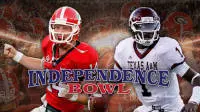
ATHENS, Ga. -- The Georgia Bulldogs (7-5) were extended, and accepted, an AdvoCare V100 Independence Bowl invitation Sunday to face Texas A&M from the Big Twelve in Shreveport, La., on Dec. 28, 2009. Kickoff is set for 4:00 p.m. CT and will be televised nationally on ESPN2.
The Bulldogs have made one previous trip to the Shreveport bowl in 1991. Led by quarterback Eric Zeier, Ray Goff's 'Dogs defeated Arkansas, 24-15, in the Razorbacks' final game as a member of the Southwest Conference. Arkansas joined the Southeastern Conference in 1992.
This will also mark the fifth meeting between Georgia and Texas A&M, the last coming in Georgia's undefeated 1980 season. The Bulldogs defeated the Aggies, 42-0, in Athens behind freshman sensation Herschel Walker. The 1980 game was Georgia's only victory over A&M. The Aggies won all three previous meetings: 6-0 in 1954 in Athens; 14-12 in 1953 in Dallas; and 40-20 in the 1950 Presidential Cup bowl game in College Park, Md.
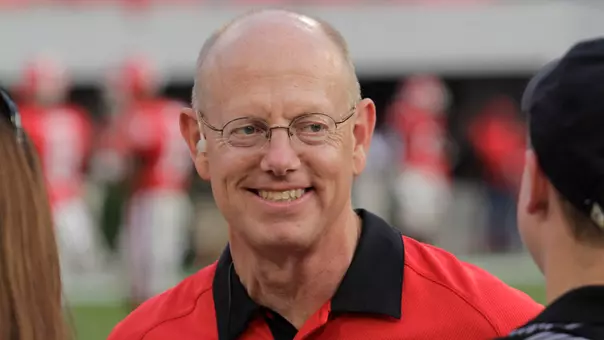
"We are delighted with the selection of our team to represent the Southeastern Conference in the AdvoCare V100 Independence Bowl," said UGA Director of Athletics Damon Evans who played wide receiver in Georgia's only other trip to Shreveport. "It's an opportunity to return to Shreveport after 18 years and play a team with great football history and tradition in Texas A&M. We are greatly appreciative of the Independence Bowl for the invitation and look forward to bringing our team and fans to Shreveport over the holidays."
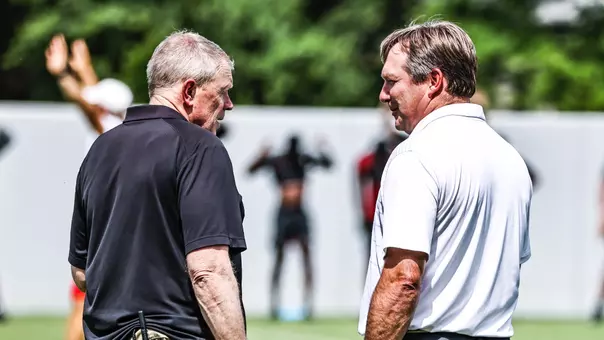
"I'm really happy for our team and especially our seniors to have this opportunity to not only play another game but also visit a destination that will be new to most of our people," said UGA head coach Mark Richt. "I know our team and coaches will prepare well to represent the Southeastern Conference against Texas A&M, a team with great football tradition who I'm sure will be at its best."
This will be Georgia's 45th bowl game—sixth most of any team in the country. The Bulldogs' bowl record is 25-16-3.
Gameday Charter Package To Advocare V100 Independence Bowl
Follow the Bulldogs to cheer them on against Texas A&M in the Advocare V100 Independence Bowl on Monday, December 28, in Shreveport, Louisiana, by reserving your seat on the Official Bowl Gameday Charter package of the Georgia Bulldogs. Kick-off is scheduled for 4:00pm CT.
The Gameday Charter packages are designed with making traveling to see the Bulldogs affordable and fun for everyone. The packages include:
- Round-Trip Charter Air Transportation From Atlanta to Shreveport on Air Tran Airways
- Meal Service Provided During Both Departure and Return Flights
- Private Motorcoach Transportation To Stadium
- Commemorative Souvenir & Name Badge
- Tour Hosts provided by Total Sports Travel
Package Rates are per person:
$460 per person
$495 per person including a ticket
Reserve your seat online or by calling 1-888-367-8781.
INDEPENDENCE BOWL HISTORY
The Independence Bowl can trace its roots back to 1975 when the board of directors of the Shreveport-Bossier City Sports Foundation conceived the idea of bringing a postseason football game to northwest Louisiana. Applying to the National Collegiate Athletic Association for certification, the group's efforts were rewarded with the approval of a December 13, 1976 game.
In honor of the United States' 200th birthday, and the strong military presence in the Shreveport-Bossier City area, the Sports Foundation's board of directors felt that the name "Independence Bowl" would be a fitting tribute to the men and women who have fought for the United States' freedom and independence.
During the first five years of the Bowl's existence, it enjoyed a good working relationship with the Southland Conference (SLC) which provided the host team for the annual event.
The events of 1981 signaled a major turning point in the development of the Independence Bowl. The Directors of the bowl ended their agreement with the SLC, which provided them the opportunity to scour the country for the best teams available in the NCAA Division I-A ranks.
That first year, the Independence Bowl struck gold as the Aggies of Texas A&M traveled over from College Station, Texas, to take on the Cowboys of Oklahoma State. This storied rivalry between the Southwest Conference and Big-Eight Conference drew national attention to the Shreveport-Bossier City area.
The first Southeastern Conference team to make an appearance in the Independence Bowl was the University of Mississippi in 1983. Ole Miss' opponent, the Air Force Falcons, battled the explosive Rebels in a torrential downpour to carry home a 9-3 victory.
Ole Miss would return to Shreveport, this time handing the Texas Tech Red Raiders a 20-17 defeat in Independence Bowl XI. The crowd of 46,359 set an Independence Bowl attendance mark which stood until 1990.
In 1990, Louisiana Tech ran up against the University of Maryland to put on an offensive explosion in the first Poulan/Weed Eater Independence Bowl. A record breaking crowd of 48,325 filled Independence Stadium.
The 1991 matchup featured the SEC's Georgia Bulldogs, battling their soon-to-be conference foe, the University of Arkansas. Freshman quarterback Eric Zeier took the Bulldogs to a 24-15 victory over the Razorbacks.
In 1995 the Poulan/Weed Eater Independence Bowl took another giant step in its continuing climb up the ladder of postseason games, signing a three-year agreement with the Southeastern Conference for the fifth selection out of one of the nation's premier football conferences.
In 1995 the bowl enjoyed what was its greatest success to date with a sellout crowd watching in-state favorite LSU take on Michigan State. The Tigers and Spartans put on an offensive clinic, as 28 points were scored in less than two minutes of play. LSU won that contest 45-26 and helped to elevate the bowl another notch.
In 1996 the service academies regained the ground they had lost over recent years, as Army, Navy and Air Force all finished with impressive winning records. Army emerged as the stronghold with a 10-1 record and was invited to participate in the 21st Independence Bowl. Army matched up against a traditional football power, as the Auburn Tigers invaded Independence Stadium. It almost seemed as if there would be little fight left in the Cadets as they fell behind 32-7 going into the fourth quarter. But the Cadets rallied back, scoring 22 points in the final period, and the Tigers got nervous. But Auburn prevailed, as Army's kicker let a 27-yard field goal attempt go wide right, giving the Tigers a 32-29 win.
The 1997 bowl was a season rematch between the Tigers of LSU and Fighting Irish of Notre Dame, played before a sellout crowd. LSU avenged a previous loss earlier that season by besting the Irish 27-9.
Poulan/Weed Eater announced in April of 1997 that it would no longer be the game's title sponsor. At that time Glen Krupica, Independence Bowl Executive Director, and a search committee, began the task of finding the second title sponsor of the Independence Bowl. In just under a year Sanford stepped up as the new title sponsor, signing on for three years.
In 1998, the Sanford Independence Bowl hosted Ole Miss and Texas Tech in a rematch of the 1986 game. Texas Tech came into the game as the heavy favorite, but the Rebels had a different idea as to the outcome of the game. Ole Miss dominated and came away with a 35-18 victory.
The Sooners of Oklahoma made their return to the bowl scene with a trip to Shreveport for the 24th Independence Bowl. Ole Miss made its fourth appearance in the game, holding a two-and-one record. Oklahoma got out to an early lead and appeared to be dominating the Rebels, but Ole Miss fought back and won the battle 27-25. The 1999 Sanford Independence Bowl was the last football game of 1999 and the first game of the new millennium in the eastern time zone, as it ended at 12:03 a.m.
The 2000 matchup has become known as the "Snow Bowl." Texas A&M and Mississippi State met in the 25th anniversary game in a driving snowstorm that began during pregame warmups and continued throughout the entire game. Mississippi State won that game in overtime 43-41. The 2000 Independence Bowl garnered a 4.2 television rating, the second highest in the game's history.
The 26th Independence Bowl was a low-scoring game, but filled with excitement right down to the final seconds. Iowa State nearly doubled the offensive output of Alabama, but the Crimson Tide managed to pull out the win, as Iowa State kicker Tony Yelk just missed a 47-yard field goal attempt with just under a minute left in the game that might have won it for the Cyclones.
In 2002 Shreveport-Bossier hosted one of college football's most storied programs as the Nebraska Cornhuskers came to town for a matchup with Eli Manning and the Ole Miss Rebels. As has been the case the past few years the Independence Bowl was a close one, as the Rebels came back from a 17-14 halftime deficit to beat the Huskers 27-23. It marked Ole Miss Head Coach David Cutcliffe's third Independence Bowl appearance, and his third win.
Then in 2003 another return trip was in order, as the Razorbacks from Arkansas took on the Tigers from Missouri. Arkansas made it's first trip back to the Independence Bowl since its 1991 loss to then-future SEC foe, Georgia, 24-15. Missouri, led by Heisman hopeful Brad Smith, found itself down 21-7 at the half and managed only seven second-half points. Arkansas' senior-laden team came away with a 27-14 win, and snapped a six-game postseason losing streak.
The 2004 game between Iowa State and Miami Unviersity was a close game, like so many past Independence Bowls, with the Cyclones prevailing by a score of 17-13. Iowa State, which had dropped a 14-13 heartbreaker to Alabama in the 2001 game, posted the Big 12's first win in the history of the Independence Bowl. Miami University was making its Independence Bowl debut.
2005 marked the 30th anniversary of the Independence Bowl, and the matchup between Missouri and South Carolina provided the 41,332 in attendance with a showdown for the ages. South Carolina, making its debut in the Independence Bowl and led by legendary head coach Steve Spurrier, raced out to a 21-0 lead after one quarter of play before Missouri rallied for an eventual 38-31 victory. The Tigers, which had lost the 2003 game to Arkansas evened their all-time record in the Independence Bowl to 1-1. Senior quarterback Brad Smith was named the game's Offensive MVP after setting an Independence Bowl record with 432 total yards and scoring four touchdowns.
After 30 successful and memorable years, the Independence Bowl embarked upon a new era in the game's history in 2006. On August 21, the Independence Bowl partnered with PetroSun, Inc., giving the bowl its fourth title sponsor. Four months and seven days later, one of the most exciting games in Independence Bowl history was played in front of more than 45,000 fans at Independence Stadium, as the Alabama Crimson Tide fell to the Oklahoma State Cowboys 34-31, as OSU kicker Jason Ricks booted the game-winning field goal with nine seconds remaining in the game. The game took place on Thursday, December 28.
In what has become commonplace in recent Independence Bowl history, the 32nd annual edition of the game was another close contest, as the Alabama Crimson Tide (7-6) held off the Buffaloes of Colorado (6-7) by a score of 30-24 on Sunday, December 30 at Independence Stadium. Alabama raced out to a 20-0 lead after one quarter of play, and led 27-0 early in the second period, but was outscored by Colorado 24-3 the rest of the game. Alabama still managed to hold on for the victory. With its victory over Colorado, Alabama set an NCAA record for bowl game appearances (55) and wins (31).
The 33rd annual Independence Bowl featured local favorite Louisiana Tech, making its first appearance in the game since 1990, against newcomer Northern Illinois. The teams owned the national spotlight as the Bulldogs and Huskies squared off on Sunday night, Dec. 28 under the lights at Independence Stadium and in front of a national television audience on ESPN. Tech speedster Phillip Livas electrified the crowd of over 41,000 with a 97-yard kickoff return for a touchdown late in the first quarter which tied the game at 7-7 but gave the Bulldogs the momentum. Livas' return was the second-longest in Independence Bowl history and first since Ole Miss' Deuce McAllister returned a kick for a score in the 1998 game. The Bulldogs added 10 more points, including an 11-yard TD run by Daniel Porter, and allowed only a third quarter field goal to NIU as Louisiana tech hold on for the 17-10 victory, its first bowl win since 1977, fittingly also in the Independence Bowl.