
University of Georgia Athletics
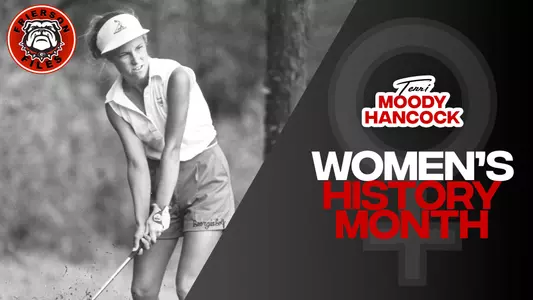
History-Making Hancock Got It Done In ’81
March 31, 2022 | Women's Golf, The Frierson Files
By John Frierson
Staff Writer
Georgia women have won more than 100 individual national championships, in everything from tennis and track to swimming and gymnastics. In 2004 alone, swimmer Kara Lynn Joyce captured five NCAA titles in individual and relay events and Hyleas Fountain won three NCAA titles in track that year.
But there can only be one first individual national champion. For that, as Women's History Month comes to a close, we go back to the spring of 1981, when Terri Moody Hancock was still Terri Moody, a senior golfer competing in the AIAW Golf National Championships at the UGA Golf Course.
An Athens native, from a family of great Georgia golfers, Hancock had played on the boys' team at Athens Academy before becoming the first woman to receive a full athletic scholarship to the University of Georgia. At the time, that distinction wasn't something she thought much about, Hancock said.
"What it makes me feel now is it makes me feel really old," she joked.
During her stellar Bulldog career (1978-81), Hancock won four tournaments and was a two-time All-American — she was also the low amateur at the 1979 U.S. Women's Open. Hancock never won the Liz Murphey Collegiate Classic, named for the legendary women's golf coach and administrator, which was held last weekend for the 50th time, but she won the biggest event held on Georgia's course during her time as a student-athlete.
Before the NCAA took over running women's collegiate sports alongside the men's in 1982, the Association for Intercollegiate Athletics for Women, founded in 1971, governed women's collegiate sports and their championships. During that spring in 1981, the AIAW national championships were held on the Bulldogs' home course.
Georgia had a great team that was in the hunt for the title until the final few holes. After leading following the first two rounds of the four-round tournament, the Bulldogs finished second, three strokes behind winner Florida State. On the final day, with the team battle very much up for grabs, the Seminoles impressively got four birdies on the 17th hole, while Georgia couldn't do better than par, to pull ahead for good.
"We had a good team and we had done well throughout the year, and we knew all along that this is what we're going for," she said of the team national championship. "Like the football team (in 2021), they knew they could be there but you've still got to do it. I don't remember what happened on the 17th but I know we lost about four shots there."
Individually, Hancock was in a five-way tie for second after shooting an opening-round 73, two strokes behind leader Lisa Young of Florida State. A 72 in her second round pushed Moody into the lead by a stroke over Miami's Patti Rizzo. The advantage was the same after a third-round 75. With a tight leaderboard in the team and individual competitions, every stroke was critical in the final round.
Hancock stepped to the 18th tee of her final round not knowing exactly where she stood in the individual event, she said, and not really worrying about it. Georgia still had an outside shot at the team title at that point and she was looking for an eagle on the par-5 finale. An eagle was not to be, however, after she missed the green left with her long second shot.
Soon after, she was standing over about a 2-foot putt that would give her the individual title. And she missed it. Instead of capturing the title outright on the final hole, Hancock now had to go into a playoff with Rizzo, and not a one-hole, sudden-death playoff but a three-hole playoff on holes 1-3.
As she walked off the green after missing the short putt on 18, completing a disappointing round of 76, Hancock remembers one of her playing partners, Val Skinner of Oklahoma State, whom she'd known in junior golf, offering some words of encouragement: "She pulled me over and she goes: 'You better straighten up and get in this locker room, and you're going to go out there and you're going to beat her.' And I was like, 'OK, OK.'"
Hancock didn't necessarily need the pep talk — "If I need to do something, I'm pretty much ready to go get it done," she said — and she was ready to go when the playoff began. On the first hole, she made birdie, knocking in a putt of about 15 feet, while Rizzo made par. Unfortunately for Hancock, it wasn't a one-hole playoff like most tournaments used.
"I remember thinking, Dang it, this should be over. Now we've got to play two more holes and anything can happen," Hancock said.
On the second hole, Hancock made par and Rizzo made bogey, so she was two up going into the final hole. Both players made par and as she tapped in her final putt Hancock became the first woman at Georgia to win a national championship.
Three years before, Hancock's brother, Griff Moody, placed second at the 1978 NCAAs. Griff was first-team All-SEC in 1978-80 and an All-American in 1978 and '79. His career scoring average of 72.08 ranks fourth all-time at Georgia and his 20 career top-10 finishes are tied for fifth. Their father, Griffin Moody, was the SEC champion in 1951.
Family was on Hancock's mind that day as she won her national championship. She said it was "the first and probably only tournament that my brother came to watch me play." She also remembers that her mom, Betty, was helping out with refreshments that day and dropped a block of ice on her foot.
"And she still walked all 18 holes with me," Hancock said with a laugh. "Sadly, I probably didn't even know (during the round). I think she told me after and I was probably like, 'Oh, my gosh, mom, what are you doing?' She wasn't going to miss that."
Hancock said she actually wanted to play golf at Alabama but wasn't offered a full scholarship. Murphey and Georgia did, and Hancock made the most of it.
"I loved Liz Murphey, and everyone will tell you they loved Liz Murphey," Hancock said. "I'm so happy that I came to Georgia. We had good teams all four years that I was there."
Hancock was inducted into Georgia's Circle of Honor in 1997 and the National Golf Coaches Association Hall of Fame in 2000. In 2018, Hancock was inducted into the State of Georgia's Sports Hall of Fame, alongside a couple of UGA greats in football star Champ Bailey and men's golf coach Chris Haack, and last year, she was elected to the Georgia State Golf Association's Hall of Fame.
Hancock still lives in the Athens area, with her husband, Dr. Robert Hancock, an orthopedist who has been part of the Georgia football team's medical support staff for many years. And she's mostly swapped her golf clubs for tennis rackets these days.
"I think mainly because I can't play like I used to play, and that's aggravating," she said of moving away from golf. "I took up tennis years ago and have gotten pretty good, and it fills my competitive need. I can still beat Robert."
Staff Writer
Georgia women have won more than 100 individual national championships, in everything from tennis and track to swimming and gymnastics. In 2004 alone, swimmer Kara Lynn Joyce captured five NCAA titles in individual and relay events and Hyleas Fountain won three NCAA titles in track that year.
But there can only be one first individual national champion. For that, as Women's History Month comes to a close, we go back to the spring of 1981, when Terri Moody Hancock was still Terri Moody, a senior golfer competing in the AIAW Golf National Championships at the UGA Golf Course.
An Athens native, from a family of great Georgia golfers, Hancock had played on the boys' team at Athens Academy before becoming the first woman to receive a full athletic scholarship to the University of Georgia. At the time, that distinction wasn't something she thought much about, Hancock said.
"What it makes me feel now is it makes me feel really old," she joked.
During her stellar Bulldog career (1978-81), Hancock won four tournaments and was a two-time All-American — she was also the low amateur at the 1979 U.S. Women's Open. Hancock never won the Liz Murphey Collegiate Classic, named for the legendary women's golf coach and administrator, which was held last weekend for the 50th time, but she won the biggest event held on Georgia's course during her time as a student-athlete.
Before the NCAA took over running women's collegiate sports alongside the men's in 1982, the Association for Intercollegiate Athletics for Women, founded in 1971, governed women's collegiate sports and their championships. During that spring in 1981, the AIAW national championships were held on the Bulldogs' home course.
Georgia had a great team that was in the hunt for the title until the final few holes. After leading following the first two rounds of the four-round tournament, the Bulldogs finished second, three strokes behind winner Florida State. On the final day, with the team battle very much up for grabs, the Seminoles impressively got four birdies on the 17th hole, while Georgia couldn't do better than par, to pull ahead for good.
"We had a good team and we had done well throughout the year, and we knew all along that this is what we're going for," she said of the team national championship. "Like the football team (in 2021), they knew they could be there but you've still got to do it. I don't remember what happened on the 17th but I know we lost about four shots there."
Individually, Hancock was in a five-way tie for second after shooting an opening-round 73, two strokes behind leader Lisa Young of Florida State. A 72 in her second round pushed Moody into the lead by a stroke over Miami's Patti Rizzo. The advantage was the same after a third-round 75. With a tight leaderboard in the team and individual competitions, every stroke was critical in the final round.
Hancock stepped to the 18th tee of her final round not knowing exactly where she stood in the individual event, she said, and not really worrying about it. Georgia still had an outside shot at the team title at that point and she was looking for an eagle on the par-5 finale. An eagle was not to be, however, after she missed the green left with her long second shot.
Soon after, she was standing over about a 2-foot putt that would give her the individual title. And she missed it. Instead of capturing the title outright on the final hole, Hancock now had to go into a playoff with Rizzo, and not a one-hole, sudden-death playoff but a three-hole playoff on holes 1-3.
As she walked off the green after missing the short putt on 18, completing a disappointing round of 76, Hancock remembers one of her playing partners, Val Skinner of Oklahoma State, whom she'd known in junior golf, offering some words of encouragement: "She pulled me over and she goes: 'You better straighten up and get in this locker room, and you're going to go out there and you're going to beat her.' And I was like, 'OK, OK.'"
Hancock didn't necessarily need the pep talk — "If I need to do something, I'm pretty much ready to go get it done," she said — and she was ready to go when the playoff began. On the first hole, she made birdie, knocking in a putt of about 15 feet, while Rizzo made par. Unfortunately for Hancock, it wasn't a one-hole playoff like most tournaments used.
"I remember thinking, Dang it, this should be over. Now we've got to play two more holes and anything can happen," Hancock said.
On the second hole, Hancock made par and Rizzo made bogey, so she was two up going into the final hole. Both players made par and as she tapped in her final putt Hancock became the first woman at Georgia to win a national championship.
Three years before, Hancock's brother, Griff Moody, placed second at the 1978 NCAAs. Griff was first-team All-SEC in 1978-80 and an All-American in 1978 and '79. His career scoring average of 72.08 ranks fourth all-time at Georgia and his 20 career top-10 finishes are tied for fifth. Their father, Griffin Moody, was the SEC champion in 1951.
Family was on Hancock's mind that day as she won her national championship. She said it was "the first and probably only tournament that my brother came to watch me play." She also remembers that her mom, Betty, was helping out with refreshments that day and dropped a block of ice on her foot.
"And she still walked all 18 holes with me," Hancock said with a laugh. "Sadly, I probably didn't even know (during the round). I think she told me after and I was probably like, 'Oh, my gosh, mom, what are you doing?' She wasn't going to miss that."
Hancock said she actually wanted to play golf at Alabama but wasn't offered a full scholarship. Murphey and Georgia did, and Hancock made the most of it.
"I loved Liz Murphey, and everyone will tell you they loved Liz Murphey," Hancock said. "I'm so happy that I came to Georgia. We had good teams all four years that I was there."
Hancock was inducted into Georgia's Circle of Honor in 1997 and the National Golf Coaches Association Hall of Fame in 2000. In 2018, Hancock was inducted into the State of Georgia's Sports Hall of Fame, alongside a couple of UGA greats in football star Champ Bailey and men's golf coach Chris Haack, and last year, she was elected to the Georgia State Golf Association's Hall of Fame.
Hancock still lives in the Athens area, with her husband, Dr. Robert Hancock, an orthopedist who has been part of the Georgia football team's medical support staff for many years. And she's mostly swapped her golf clubs for tennis rackets these days.
"I think mainly because I can't play like I used to play, and that's aggravating," she said of moving away from golf. "I took up tennis years ago and have gotten pretty good, and it fills my competitive need. I can still beat Robert."
Assistant Sports Communications Director John Frierson is the staff writer for the UGA Athletic Association and curator of the ITA Men's Tennis Hall of Fame. You can find his work at: Frierson Files. He's also on Twitter: @FriersonFiles and @ITAHallofFame.

Monday, March 30
Monday, April 28
Saturday, January 25
Tuesday, May 07