
University of Georgia Athletics
Twenty Years of Work And Excellence
August 20, 2021 | Equestrian, The Frierson Files
By John Frierson
Staff Writer
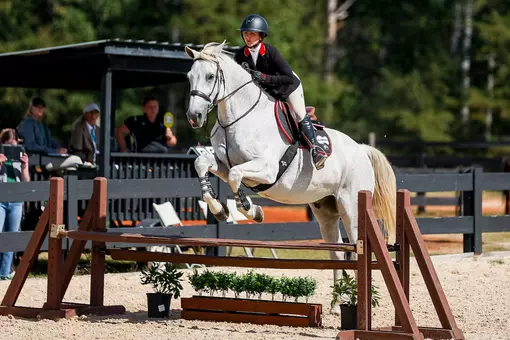
Twenty years ago, Georgia launched a new sport: equestrian. For the first time, there would be Bulldogs on horses. Seven national championships have followed.
Picked in October 2001 to lead this program was a 24-year-old coach at Texas A&M, which had just started its own equestrian team two years before. Driven, determined and detail-oriented, Meghan Boenig turned out to be the perfect person for the job.
"Everything that we thought about her has come true," said Hoke Wilder, who worked for the UGA Athletic Association for more than 15 years and was actively involved in the start of the program and the search for its head coach.
After attending Berry College, in Rome, Ga., Boenig went to graduate school at Texas A&M. She planned to get a Master's degree in Equine Exercise Physiology.
"I thought I was going to be a professor," she said.
Instead, when the Aggies started their equestrian program, she was asked to be one of the coaches, along with Tara McKay, who is still leading the A&M program.
"It totally changed my path," Boenig said.
When Georgia announced that it was starting an equestrian program, Boenig, a native of Powder Springs, Ga., applied for the job. She had also been recommended for it, Wilder said.
Vince Dooley was Georgia's Director of Athletics when the equestrian program was added. Boenig remembers making sure to wear the perfect shade of red for her interview, and she remembers that Dooley commented on how young she was.
"And I said, 'But if I can do this well, Coach, I can be awfully good for an awfully long time.' I felt like I just had to lay it all out there," Boenig said. "This was my chance to be at this program, and it all paid off. And I'm always so grateful for that opportunity."
When the Bulldogs open their season at Auburn on Oct. 8, they will be starting the 20th season in program history. From humble beginnings, Boening has built a collegiate equestrian powerhouse. Last spring, the Bulldogs won their seventh national championship.
Of the 18 seasons Georgia has completed (2020 was canceled before the SEC and National Collegiate Equestrian Association championships because of the coronavirus pandemic), seven have ended with the Bulldogs No. 1, including the program's first varsity season, in 2003.
The NCEA currently consists of 26 schools that have equestrian programs, 20 of them Division I schools. The programs stretch from coast to coast, from the College of Charleston (S.C.) to Fresno State in California. The four SEC schools with equestrian programs are Georgia, South Carolina, Auburn and Texas A&M, and the overall NCEA national champion has been one of those four since the first one (Texas A&M) was crowned in 2002.
Georgia leads all programs with seven national titles, including in 2021. Auburn is second with six and Texas A&M and South Carolina both have won three each.
Before that inaugural varsity season, Georgia competed at the NCEA championships and won the Hunter seat competition. That squad was comprised of riders who had competed for the club team at UGA. It was the start of something special.
Collins Daye was a rider at the start of the program. She had been competing for many years and had loads of experience, but two things that were new to her were being part of a team and working with a strength and conditioning coach.
In the beginning, Georgia was having to figure out some things as they went along, including how best to train the equestrian riders' bodies. Daye remembers doing a lot more strength work than she'd ever done before.
"I came home and my mother told me I looked like a linebacker," Daye said with a laugh.
Outside of collegiate equestrian, the sport is essentially an individual one, with riders all competing against one another. In the NCEA, with its unique format that Boenig helped create along with coaches at early programs like Texas A&M, Auburn and South Carolina, the sport is all about head-to-head competition, with one rider from a school going up against a rider from the opponent, like in collegiate tennis.
"What was super cool about that experience was we were all working together as a team," Daye said. "That was so unique in the context of our sport, and I think it really touched people and really brought people together."
Twenty years after being hired to build a Georgia equestrian program from scratch, Boenig's office has gone from a room in Stegeman Coliseum to a corner office in the program's beautiful $3.1 million, 7,000-square foot Clubhouse on Georgia's 109-acre farm in Bishop, about 12 miles from campus.
Twenty years after being hired to start the program, Boenig is the most successful coach in her sport. When asked if early on she ever had a moment when she knew this was going to work, Boenig gave an answer that went a long way toward explaining her and her program's success.
"I don't know that I ever even thought of those things," she said. "It was so much just, head down and work. Keep setting goals within your headlights, knowing where you want to get to, and you just go to work and take care of business. That's always what we have done and continue to do.
"You know that if you prep these things right, the success will come afterwards."
Staff Writer
Twenty years ago, Georgia launched a new sport: equestrian. For the first time, there would be Bulldogs on horses. Seven national championships have followed.
Picked in October 2001 to lead this program was a 24-year-old coach at Texas A&M, which had just started its own equestrian team two years before. Driven, determined and detail-oriented, Meghan Boenig turned out to be the perfect person for the job.
"Everything that we thought about her has come true," said Hoke Wilder, who worked for the UGA Athletic Association for more than 15 years and was actively involved in the start of the program and the search for its head coach.
After attending Berry College, in Rome, Ga., Boenig went to graduate school at Texas A&M. She planned to get a Master's degree in Equine Exercise Physiology.
"I thought I was going to be a professor," she said.
Instead, when the Aggies started their equestrian program, she was asked to be one of the coaches, along with Tara McKay, who is still leading the A&M program.
"It totally changed my path," Boenig said.
When Georgia announced that it was starting an equestrian program, Boenig, a native of Powder Springs, Ga., applied for the job. She had also been recommended for it, Wilder said.
Vince Dooley was Georgia's Director of Athletics when the equestrian program was added. Boenig remembers making sure to wear the perfect shade of red for her interview, and she remembers that Dooley commented on how young she was.
"And I said, 'But if I can do this well, Coach, I can be awfully good for an awfully long time.' I felt like I just had to lay it all out there," Boenig said. "This was my chance to be at this program, and it all paid off. And I'm always so grateful for that opportunity."
When the Bulldogs open their season at Auburn on Oct. 8, they will be starting the 20th season in program history. From humble beginnings, Boening has built a collegiate equestrian powerhouse. Last spring, the Bulldogs won their seventh national championship.
Of the 18 seasons Georgia has completed (2020 was canceled before the SEC and National Collegiate Equestrian Association championships because of the coronavirus pandemic), seven have ended with the Bulldogs No. 1, including the program's first varsity season, in 2003.
The NCEA currently consists of 26 schools that have equestrian programs, 20 of them Division I schools. The programs stretch from coast to coast, from the College of Charleston (S.C.) to Fresno State in California. The four SEC schools with equestrian programs are Georgia, South Carolina, Auburn and Texas A&M, and the overall NCEA national champion has been one of those four since the first one (Texas A&M) was crowned in 2002.
Georgia leads all programs with seven national titles, including in 2021. Auburn is second with six and Texas A&M and South Carolina both have won three each.
Before that inaugural varsity season, Georgia competed at the NCEA championships and won the Hunter seat competition. That squad was comprised of riders who had competed for the club team at UGA. It was the start of something special.
Collins Daye was a rider at the start of the program. She had been competing for many years and had loads of experience, but two things that were new to her were being part of a team and working with a strength and conditioning coach.
In the beginning, Georgia was having to figure out some things as they went along, including how best to train the equestrian riders' bodies. Daye remembers doing a lot more strength work than she'd ever done before.
"I came home and my mother told me I looked like a linebacker," Daye said with a laugh.
Outside of collegiate equestrian, the sport is essentially an individual one, with riders all competing against one another. In the NCEA, with its unique format that Boenig helped create along with coaches at early programs like Texas A&M, Auburn and South Carolina, the sport is all about head-to-head competition, with one rider from a school going up against a rider from the opponent, like in collegiate tennis.
"What was super cool about that experience was we were all working together as a team," Daye said. "That was so unique in the context of our sport, and I think it really touched people and really brought people together."
Twenty years after being hired to build a Georgia equestrian program from scratch, Boenig's office has gone from a room in Stegeman Coliseum to a corner office in the program's beautiful $3.1 million, 7,000-square foot Clubhouse on Georgia's 109-acre farm in Bishop, about 12 miles from campus.
Twenty years after being hired to start the program, Boenig is the most successful coach in her sport. When asked if early on she ever had a moment when she knew this was going to work, Boenig gave an answer that went a long way toward explaining her and her program's success.
"I don't know that I ever even thought of those things," she said. "It was so much just, head down and work. Keep setting goals within your headlights, knowing where you want to get to, and you just go to work and take care of business. That's always what we have done and continue to do.
"You know that if you prep these things right, the success will come afterwards."
Assistant Sports Communications Director John Frierson is the staff writer for the UGA Athletic Association and curator of the ITA Men's Tennis Hall of Fame. You can find his work at: Frierson Files. He's also on Twitter: @FriersonFiles and @ITAHallofFame.
Georgia Equestrian SEC Championship vs. Texas A&M Postgame Sound
Saturday, March 28
Georgia Equestrian SEC Semifinal vs. South Carolina Video Recap
Friday, March 27
Georgia Equestrian - Lantz Family Feature
Monday, March 02
Georgia Equestrian vs Auburn - Postgame Interview
Saturday, February 28